


Cedar fever in Austin is a winter allergy linked to pollen from Ashe juniper trees, often called mountain cedar. To reduce your exposure at home, start by keeping pollen out, using a filter that fits your HVAC system, and cleaning pollen that settles indoors.
UV-C has a separate role inside an HVAC system, and it does not physically remove pollen. Duct cleaning should depend on the condition of your ducts. Neither service is a treatment for cedar allergy.
When is cedar fever season in Austin?
Central Texas has large numbers of Ashe juniper trees. According to the Texas A&M Forest Service, they typically start releasing pollen around mid-December. Production often peaks in January and tapers toward early March.
The timing changes with the weather. Dry, windy conditions around a cold front can help release and spread pollen. You also don’t need a mountain cedar tree in your yard to be exposed. Wind can carry pollen away from the trees that produced it.
Use that seasonal window to prepare, then check local reports for day-to-day conditions. A calendar alone won’t tell you how much pollen is in the air near your home.
What does cedar fever feel like?
Cedar allergy is a form of allergic rhinitis, the medical term for allergy-related irritation inside the nose. Common symptoms include:
- Sneezing.
- A runny or stuffy nose.
- Itchy or watery eyes.
- Itching in the nose, throat, or roof of the mouth.
These are common allergic rhinitis symptoms described by the American Academy of Allergy, Asthma & Immunology. Symptoms alone don’t confirm that cedar pollen is the cause. Other allergens and illnesses can cause overlapping problems.
Despite the name, cedar allergies do not cause a fever. The American College of Allergy, Asthma & Immunology explains this distinction. If you have a fever, ask a healthcare professional what may be causing it.
How does cedar pollen get inside?
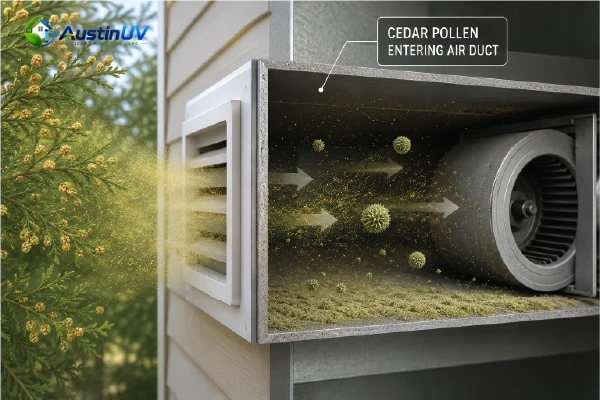
Pollen can enter through open windows and doors. It can also travel indoors on clothing, hair, and pets. The National Institutes of Health recommends reducing these sources of indoor pollen.
After a walk or yard work, pollen on your clothes and hair can reach the couch or your pillow. A useful home plan covers airborne particles and what settles on surfaces.
Six ways to reduce pollen exposure at home
1. Check an Austin-area pollen report
Use the AAAAI National Allergy Bureau to find an available nearby reporting station. Check the location and date so you know what the report represents.
Also pay attention to whether you’re reading a measured count or a forecast. AAAAI explains that counts come from collected samples, while forecasts predict conditions.
A local report can help you decide when to shorten outdoor activities or move a task to another day. It doesn’t measure the pollen inside your house. Avoid relying on a universal rule that one particular hour is always best for going outside.
2. Keep windows closed when pollen is high
An open window can let pollen in along with the breeze. Keep bedroom and living-area windows closed during high pollen periods, and avoid leaving exterior doors open longer than needed.
The CDC recommends keeping windows closed and limiting outdoor time when pollen levels are high. Apply the same idea when you’re driving: opening the car windows can increase your exposure before you even get home.
3. Change your routine after outdoor time
After yard work, a long walk, or other outdoor activity, change clothes and shower to wash pollen from your skin and hair. Those steps are also part of the CDC’s pollen guidance.
Keep outdoor clothing off your bed. If pets have been outside, remember that their coats can carry pollen indoors too.
Laundry matters as well. The American College of Allergy, Asthma & Immunology recommends avoiding outdoor clothes drying during pollen season, because pollen can collect on clothing, sheets, and towels.
4. Use an HVAC filter your system can handle
Your heating and cooling system’s filter captures particles from air that passes through it. The filter’s MERV rating describes how well it captures particles of different sizes.
The EPA recommends MERV 13, or the highest rating the system’s fan and filter slot can accommodate. Check your equipment’s instructions or ask a qualified HVAC professional before changing filter types.
Fit also matters. ASHRAE explains that air leaking around a filter goes untreated. Check the required dimensions and make sure the filter sits correctly in its holder.
Follow the filter and equipment manufacturers’ replacement instructions. If you don’t know the size or type you need, photograph the current label and the equipment model information before shopping. That gives you a useful starting point for checking compatibility.
5. Consider a portable HEPA air cleaner
A portable air cleaner may be useful in a bedroom or another room where you spend a lot of time. HEPA stands for high-efficiency particulate air. An EPA explanation of HEPA filters identifies pollen among the airborne particles these filters can capture.
Look beyond the word “HEPA” on the box. Check the clean air delivery rate, or CADR, which indicates how much filtered air the unit supplies. Choose a unit rated for the room’s size, keep its air openings clear, and maintain its filter.
The EPA’s home air cleaner guide notes that CADR ratings generally reflect the highest fan setting. A quieter, lower setting moves less air. Choose a unit you can comfortably run at a useful speed.
A room air cleaner won’t remove every pollutant or clean pollen off your bedding. Avoid devices designed to produce ozone; EPA identifies ozone as a lung irritant.
6. Clean the pollen and dust that settle
Make regular surface cleaning part of the plan. Vacuum floors, damp-mop hard surfaces, and wipe dusty areas with a damp cloth. Where possible, use a vacuum with a HEPA filter. These practices follow the NIH’s guidance for reducing dust and indoor exposures.
Start with the bedroom if changing your whole routine feels like too much. Keep outdoor clothes away from the bed, wash bedding regularly, and keep the window closed when pollen is high. Add other rooms as you build a routine you can maintain.
Filters, UV-C, and duct cleaning: What does each do?
These options address different conditions. Use this comparison to guide your questions before buying equipment or scheduling work.
| Option | Main role | Practical limit |
|---|---|---|
| Compatible HVAC particle filter | Captures particles in air passing through the filter | Needs the right fit and system compatibility |
| Portable HEPA air cleaner | Filters airborne particles in a room or area | Needs suitable airflow, placement, and room sizing |
| HVAC UV-C system | Can help control microbial growth on surfaces that receive adequate UV exposure | Does not physically collect pollen |
| Air duct cleaning | Removes accumulated debris when duct conditions justify cleaning | Does not establish or treat the cause of allergy symptoms |
The distinctions above follow EPA guidance on air cleaners, UV systems, and duct cleaning.
Can UV light help with cedar fever?
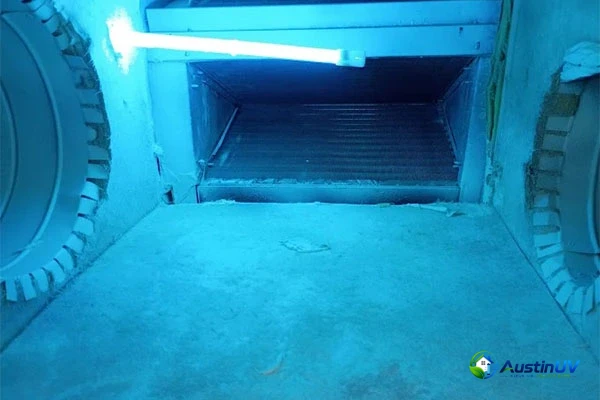
UV-C is a type of ultraviolet light used in some HVAC systems to control microorganisms. With suitable design and exposure, it can help limit microbial growth on exposed cooling coils and drain pans. Performance depends on the equipment, placement, and exposure conditions.
Pollen removal is a separate task. The EPA’s technical review of residential air cleaners explains that UV systems do not capture or remove particles. It also notes that inactive biological material can still contain allergens.
For cedar pollen, keep particle filtration and exposure reduction central to your plan. A UV installation does not replace your HVAC filter or allergy care.
If you’re considering UV light installation in Austin, ask what the proposed system is designed to treat and how it should be maintained.
Should you clean your air ducts during cedar season?
Cedar season alone isn’t a reason to schedule duct cleaning. An inspection should establish whether there is a condition that needs attention.
The EPA identifies several conditions that may justify duct cleaning: substantial visible mold on hard duct surfaces or HVAC components, a pest infestation, ducts clogged with excessive dust or debris, or particles being released from supply vents. A dusty vent cover by itself doesn’t show that the ducts need cleaning.
EPA also says duct cleaning has not been shown to prevent health problems. Wet or moldy duct insulation should be replaced, and the moisture source needs to be corrected.
Austin UV Light uses a powerful negative air machine for air duct cleaning in Austin. “Negative air” means suction helps collect loosened debris. The National Air Duct Cleaners Association describes cleaning as both loosening deposits and collecting them.
Before approving work, ask which parts of your system need cleaning, what the proposed service includes, and what condition the work is intended to address.
When should you talk to a healthcare professional?
If symptoms keep interrupting sleep, work, or everyday activities, talk with a healthcare professional. An allergist can help identify your triggers and discuss treatment. The American College of Allergy, Asthma & Immunology explains when an allergy evaluation may help.
Pollen can also worsen asthma in people who are sensitive to it. Follow your prescribed treatment and asthma action plan, and seek medical advice about wheezing or breathing symptoms. Home air services should not delay that care.
Call 911 for severe trouble breathing or difficulty talking because of breathlessness. These are among the emergency warning signs in the CDC’s asthma action plan.
Common questions about cedar fever in Austin
1. Can I develop cedar allergies as an adult?
Yes, allergies can begin in adulthood. The American College of Allergy, Asthma & Immunology notes that allergies can develop at any age. New winter symptoms are a reason to ask about possible triggers, rather than assume cedar is the cause.
2. What if my symptoms continue after cedar season?
Other pollens and indoor allergens can also cause symptoms. AAAAI identifies pet dander, dust mites, and mold among possible indoor allergy triggers. An allergy evaluation can help clarify what you’re reacting to.
3. Can an air purifier make my home pollen-free?
No air cleaner removes all pollutants. A properly sized particle-filtering unit can capture airborne pollen that reaches it, but exposure reduction and surface cleaning still matter. The EPA recommends treating filtration as one part of an indoor air plan.
Schedule an air duct inspection in Austin
Austin UV Light provides air duct cleaning in Austin and nearby areas. If you’re concerned about buildup in your ducts, you can start with an inspection.
Our residential duct inspection fee is $99. That fee covers the inspection only and is credited toward the work once you approve it.
Book an inspection with Austin UV Light. Tell us what you’ve noticed and what you want checked so we can discuss the right next step for your home.